Cart totals
| Subtotal | €72.00 |
|---|---|
| Shipping |
Shipping options will be updated during checkout. |
| Total | €79.90 (includes €6.60 VAT) |
| Subtotal | €72.00 |
|---|---|
| Shipping |
Shipping options will be updated during checkout. |
| Total | €79.90 (includes €6.60 VAT) |

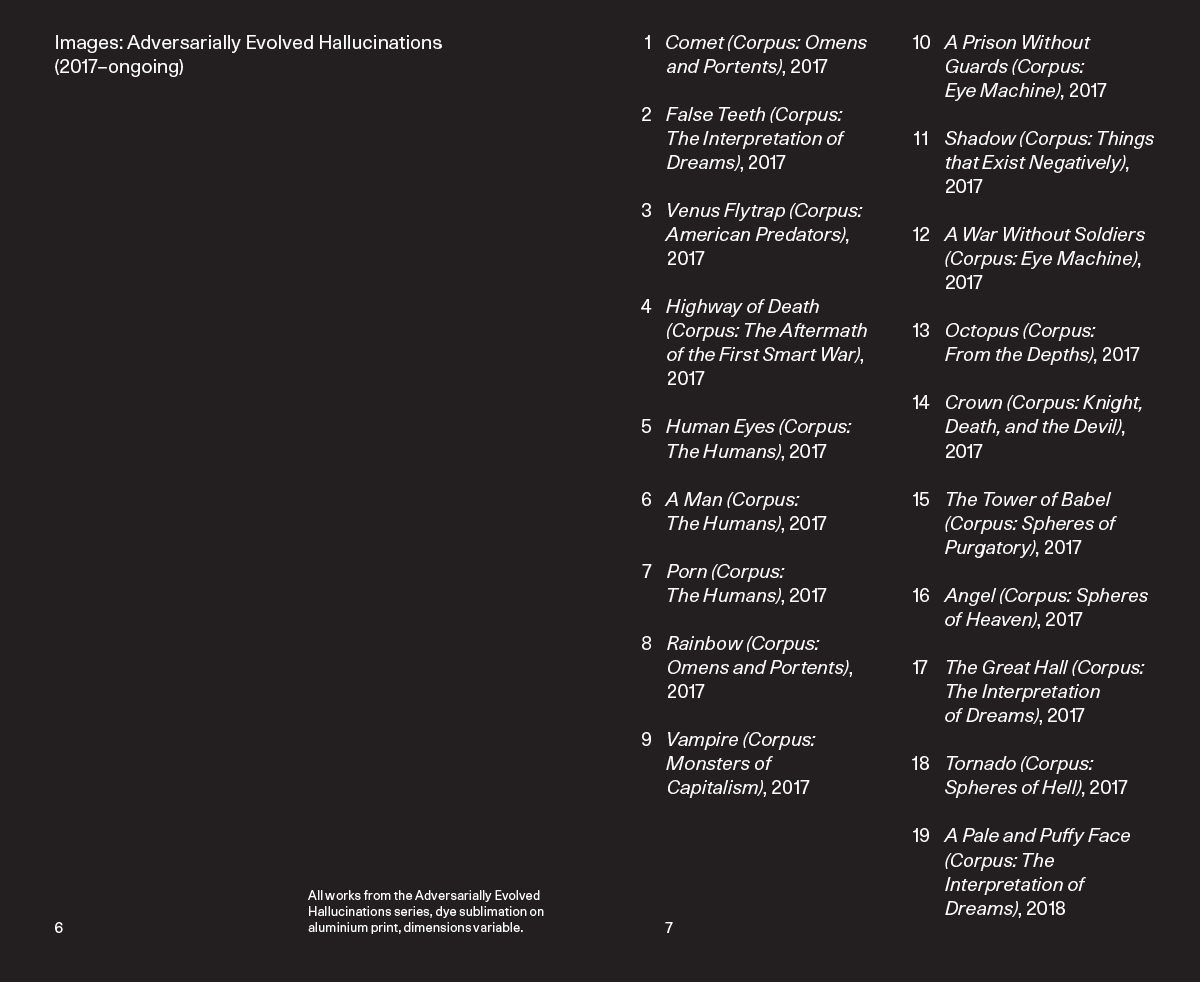
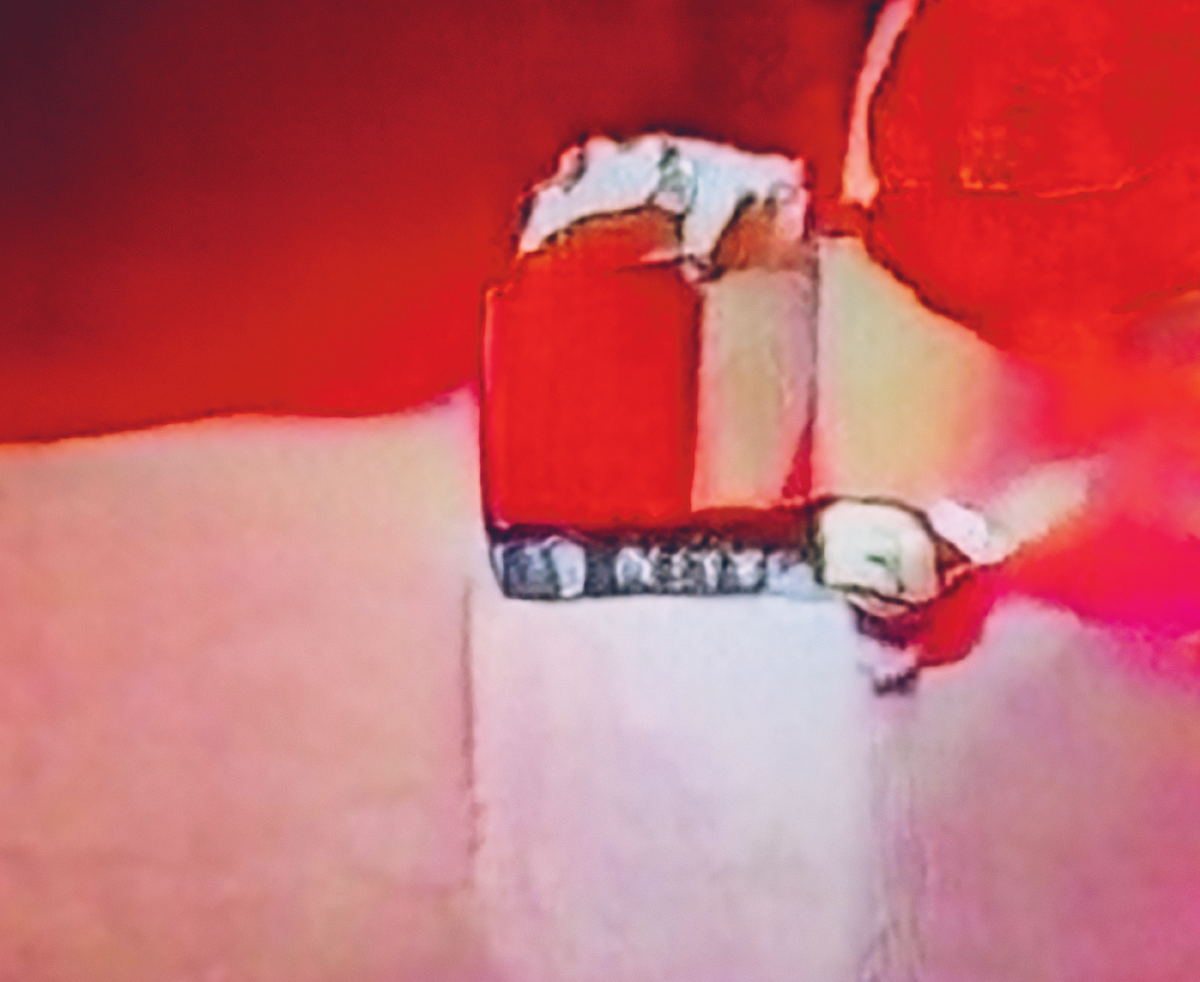
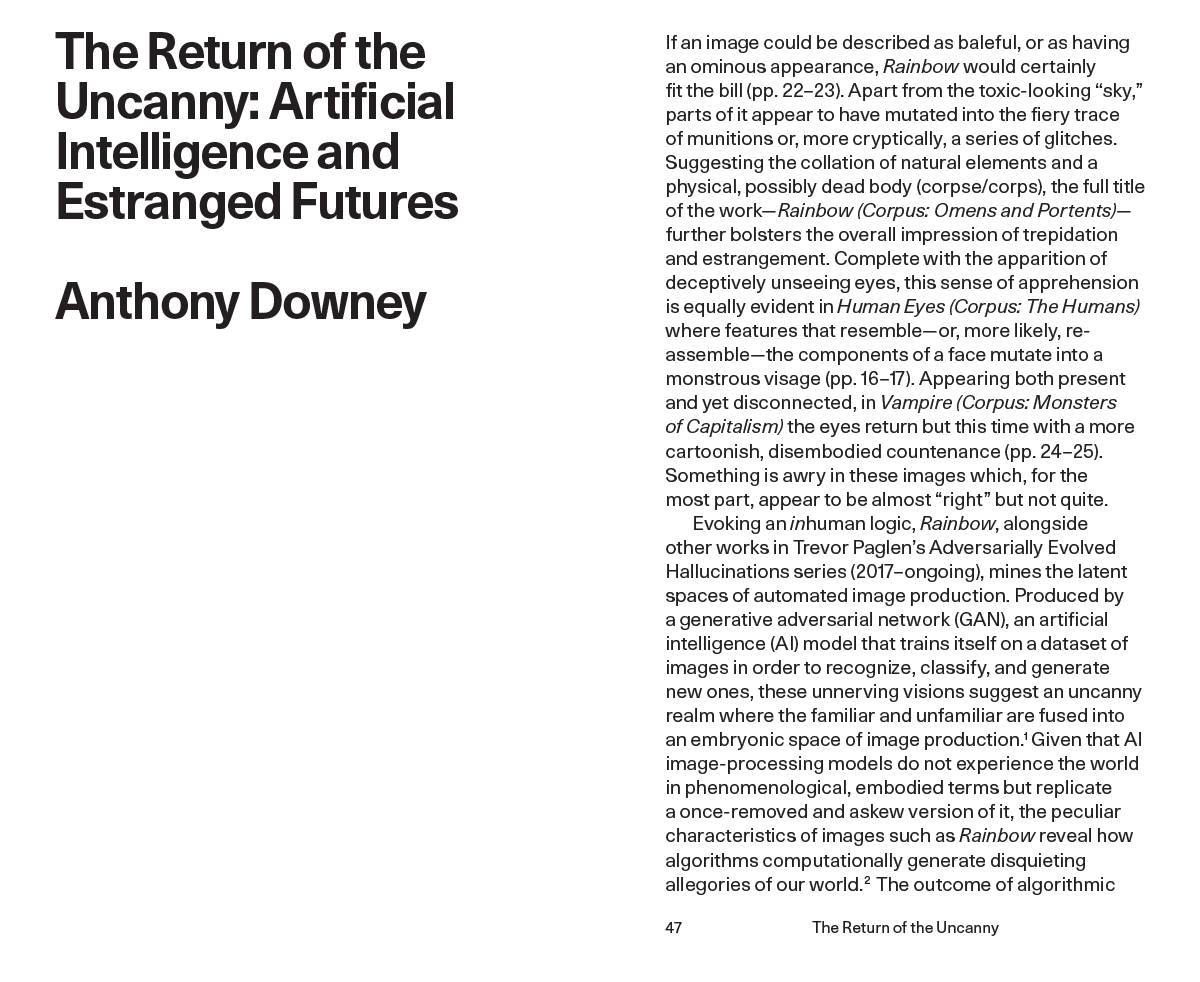
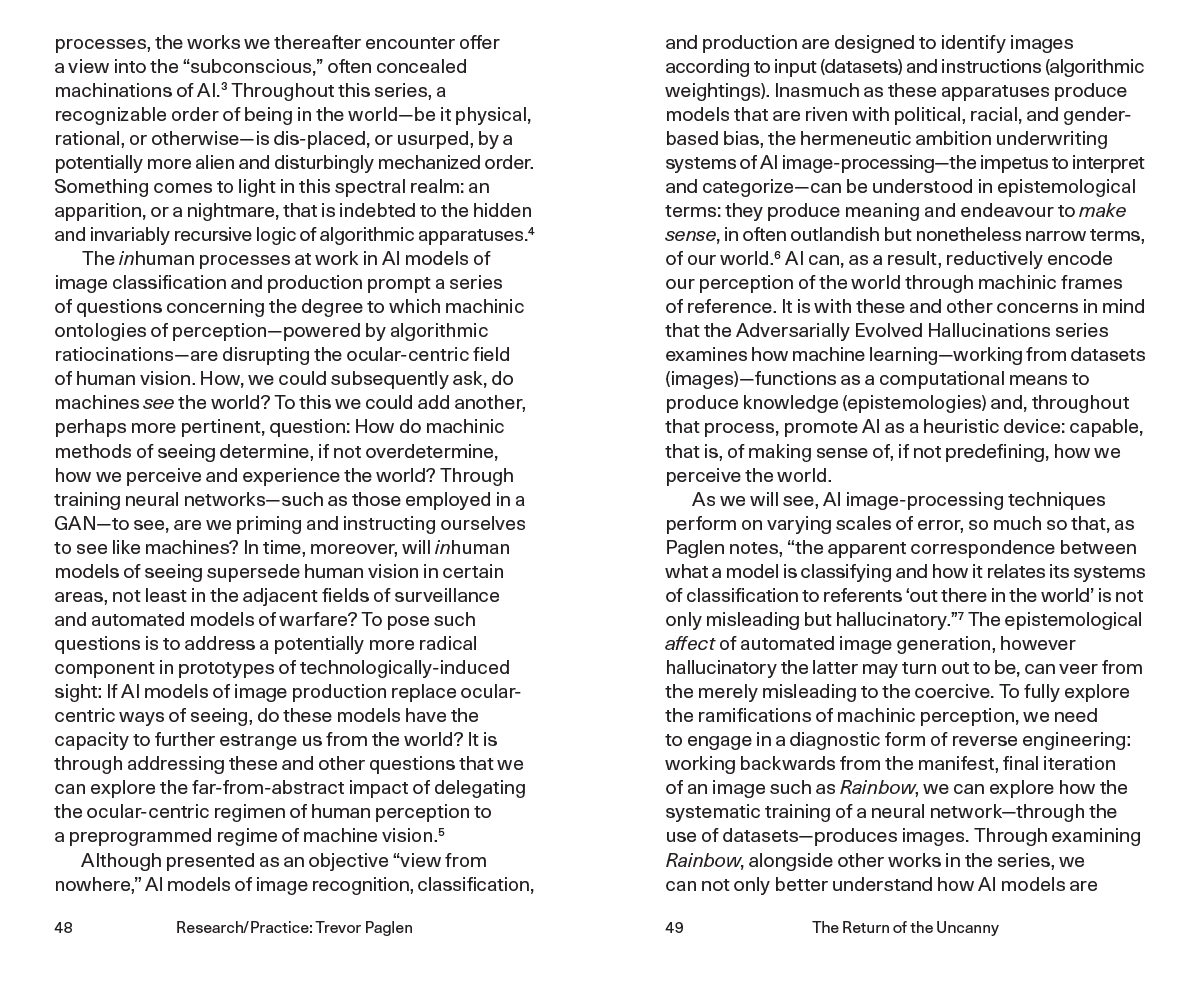
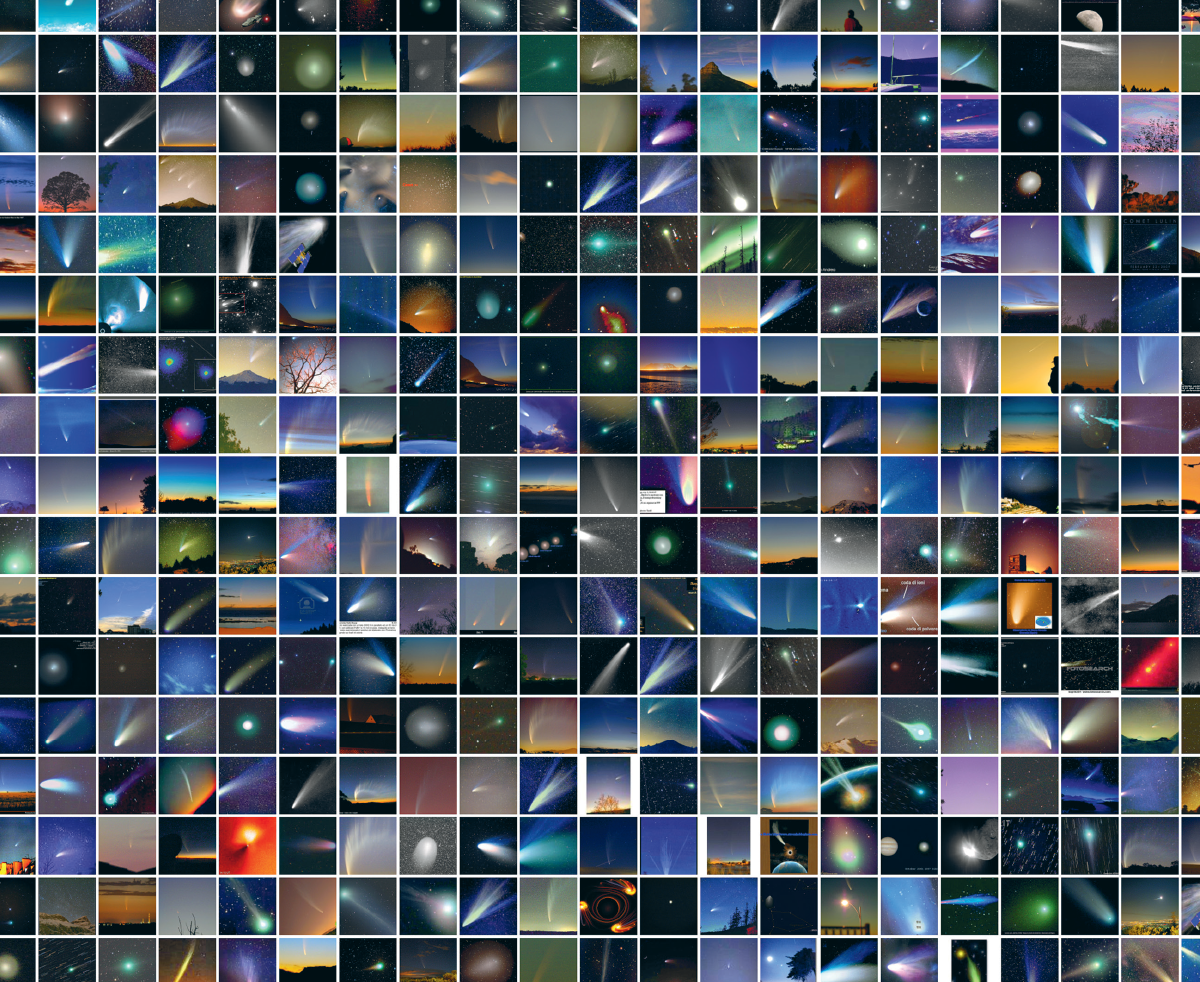
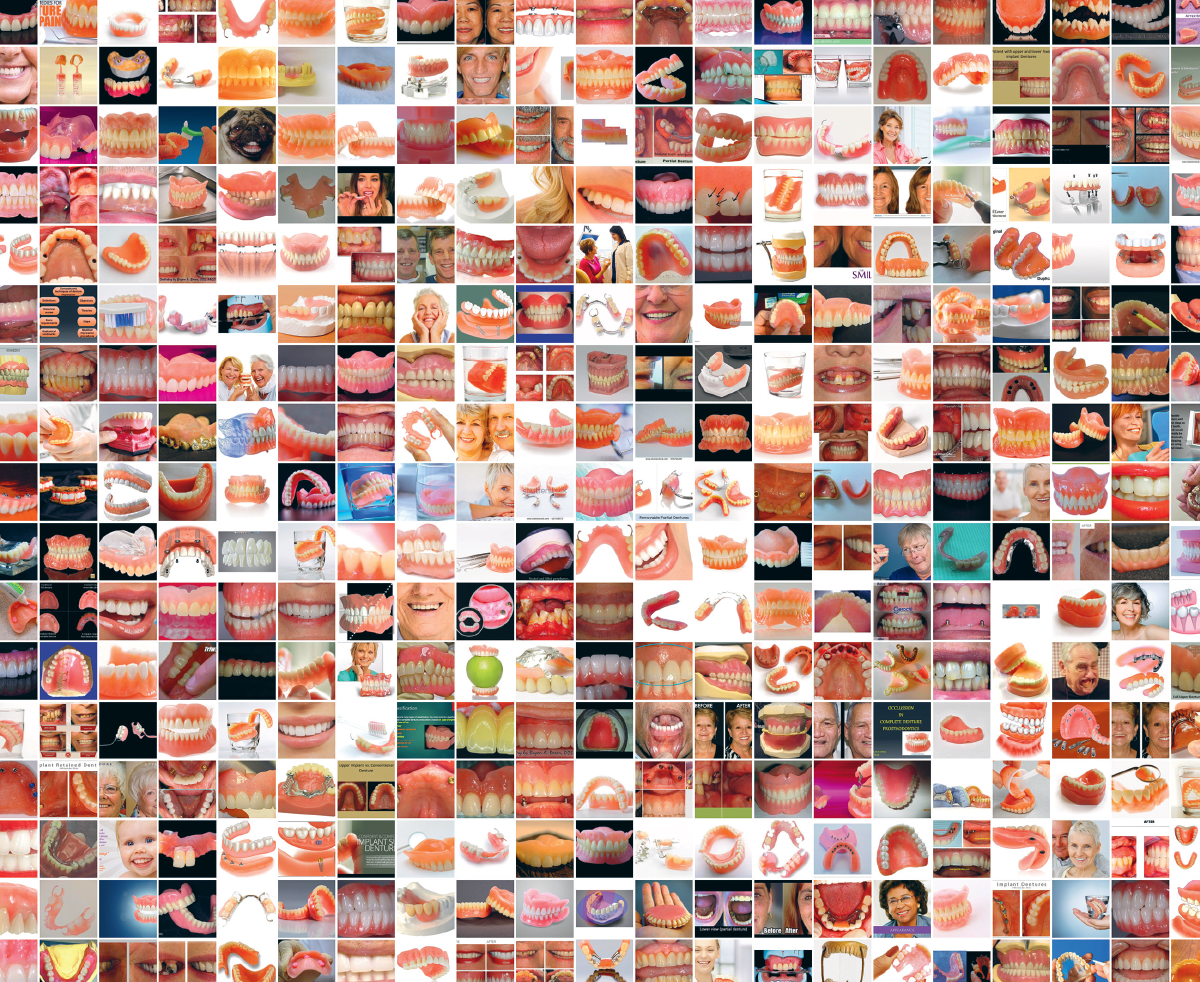
Although often considered to be a fault or a glitch in the system, the event of hallucination is central to the models of image production generated by artificial intelligence (AI). Through mining the latent space of computer vision, Trevor Paglen’s series Adversarially Evolved Hallucinations (2017–ongoing) reveals this phantasmal and hallucinatory domain. In the conversation included in this volume, he discusses how we can think from within these opaque structures and, in turn, questions the frequently inflated claims made on behalf of automated image-production systems. In an accompanying essay, Anthony Downey explores the uncanny realm of algorithmically induced images and proposes that AI, through its generative modelling of the world, invariably estranges us from the present and the future.
Trevor Paglen is a multidisciplinary artist known for blending image-making, sculpture, journalism, and engineering into his work. His art, which explores themes like state secrecy and artificial intelligence, has been exhibited globally, including at the Smithsonian Museum of American Art and the Barbican Centre. Notably, Paglen launched an artwork into orbit and contributed to the Oscar-winning film Citizenfour. He has also created public art for Fukushima’s exclusion zone. An acclaimed author, Paglen’s contributions to investigative journalism and art have been recognized with awards like the Electronic Frontier Foundation’s Pioneer Award and the MacArthur Fellowship. He holds degrees from UC Berkeley and the Art Institute of Chicago, underscoring his diverse expertise across art, geography, and technology.
Anthony Downey is Professor of Visual Culture in the Middle East and North Africa (Birmingham City University) and the series editor for Research/Practice (2019–ongoing). He sits on the editorial boards of Third Text, Digital War, and Memory, Mind & Media, respectively. Recent and forthcoming publications include Decolonising Vision: Algorithmic Anxieties and the Future of Warfare (2025); Falling Forward: Khalil Rabah—Works, 1995–2025 (2023), and Shona Illingworth: Topologies of Air (2022). Downey is the recipient of a series of Arts and Humanities Research Council (AHRC) awards, including a four-year multidisciplinary project that focuses on cultural practice and educational provision for children with disabilities in Lebanon, the Occupied Palestinian Territories, and Jordan (2021–2025).