Your cart is currently empty.
Cart
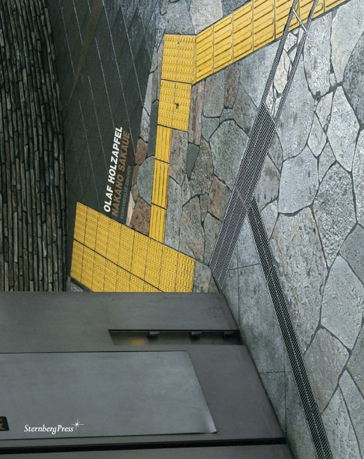
Nakano Sakaue
Verhandelte Zeichen
Text by Andreas Spiegl
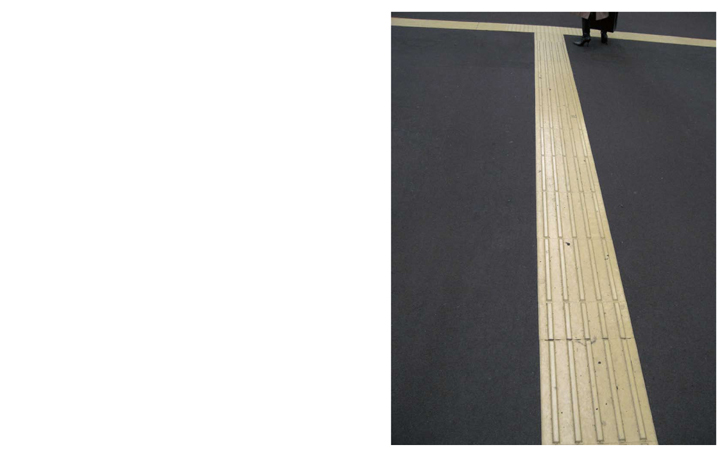
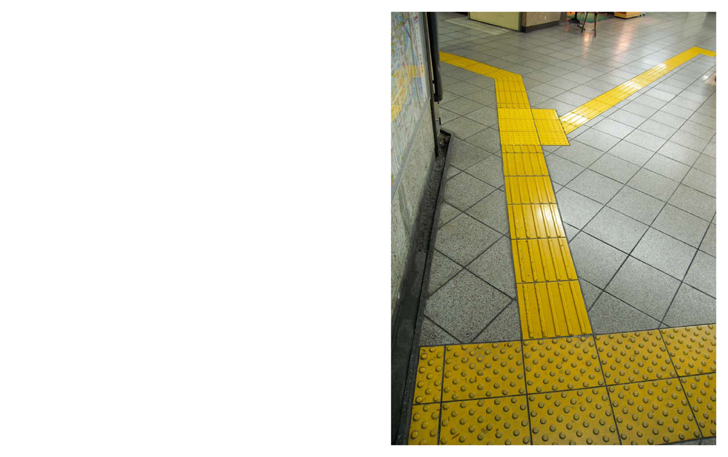
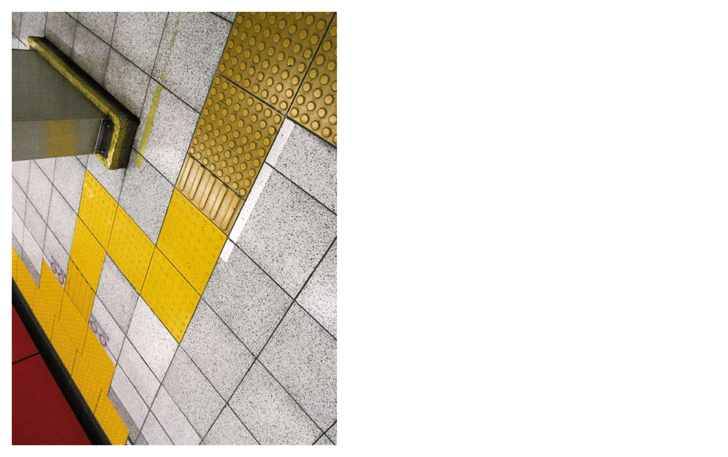
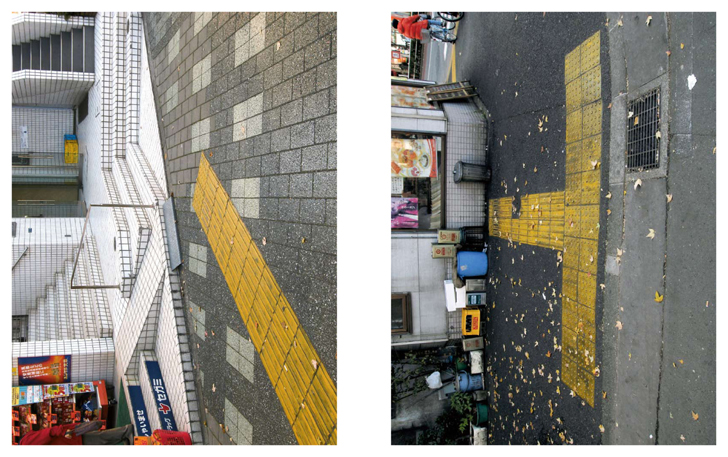
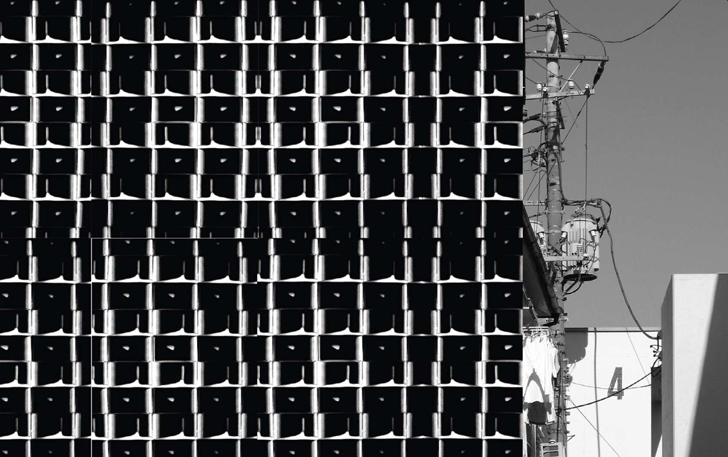
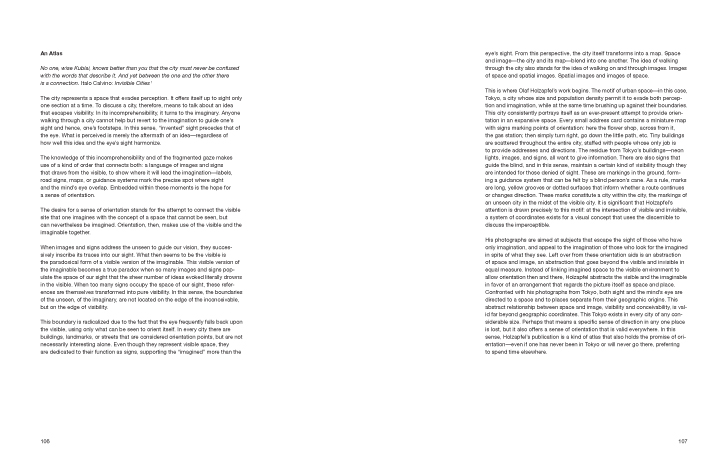
Nakano Sakaue documents a series of photographs realized by Olaf Holzapfel during a residency in Tokyo. The artist has depicted a kind of residue from the city’s buildings: neon lights, images, and street signs, which are featured as so many promises for orientation. Most prominent are the signs that guide the blind: they are markings in the ground, forming a guidance system that can be felt by a blind person’s cane. As a rule, the marks are long, yellow grooves or dotted surfaces that inform whether a route continues or changes direction. These marks constitute a city within the city, the markings of an unseen city in the midst of the visible city.
Holzapfel’s attention is drawn precisely to this motif: at the intersection of visible and invisible, a system of coordinates exists for a visual concept that uses the discernible to discuss the imperceptible. According to the author Andreas Spiegl, the artist’s pictures “offer both vision and a view that is searching for orientation. In this sense, they represent both images and maps alike. They show specific situations, and allude to an abstraction that liberates itself from place in order to point to the imaginary. Seeing the imaginary, the eye moves through the image to return to the coordinates of perception itself. The geography that Holzapfel sketches with this atlas describes perception as a territory—the view of the visible and the imaginary, as a city, appears anywhere the relationship of each to the other can be seen.”

Hardcover
€29.00
Related Books