Your cart is currently empty.
Cart
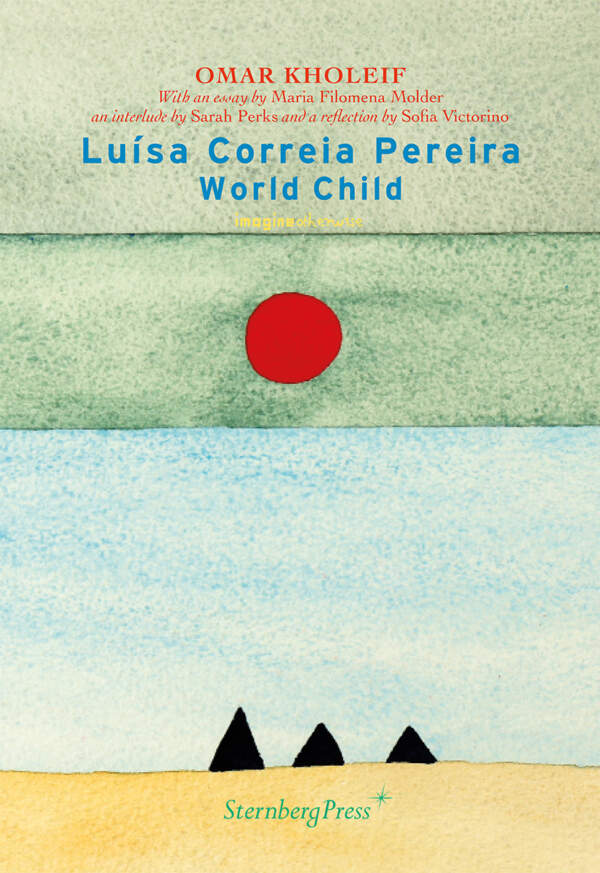
Luísa Correia Pereira
World Child
Foreword by Maria Filomena Molder
Contributions by Sarah Perks, Sofia Victorino
“Portugal is not a place for women.”
These words propelled the artist Paula Rego to pursue an English education, which informed her future career and subsequent legacy. How would life have looked for Luísa Correia Pereira had someone told her something similar in view of being a queer woman in the 1970s and ’80s? Born into one of Portugal’s aristocratic dynasties, Pereira shunned her family, propelled instead by a singular pursuit of her art. At seventeen, in 1962, she volunteered to work on the World Expo in Brazil where she became aware of poetry, cosmology, and biodiversity—all major influences on her work.
Pereira then spent some time in Paris during the peak of the second-wave feminist movement, and studied library science, a field common to several women artists of the time. While working at the Foundation Nationale des Sciences Politiques in Paris she developed her painting practice after receiving a grant from the Gulbenkian Foundation. Here she was aided by the tutelage of the famed Portuguese artist Julio Pomar.
Following the Carnation Revolution in 1974, Pereira returned to Portugal, where she experienced spells of recognition before falling into obscurity, partly due to episodes of manic depression. The press dubbed her an enfant terrible. She was renowned for being able to draw people into her orbit, then alienate them just as quicky—a habit that few realized was a consequence of her complex post-traumatic stress. The emotional topography of her life transpires in her early works on paper including watercolors, frottage, and collage, often depicting surrealist landscapes with distended bodies blanketed under thick washes of color. Her later canvases portrayed amorphous limbs strung together by ladders that would become a recurring motif for the rest of her working life.
In this volume, author and cultural historian Dr. Omar Kholeif narrates a five-year journey through a collection of Correia Pereira’s works that variously speak, sing, and cry, returning us to a child of nature. Compiled from hundreds of hours of interviews during time spent in Portugal, France, and Brazil, this first monograph in English on the artist’s work and life is at once searing and heartwarming.
Softcover
€15.00