Your cart is currently empty.
Cart
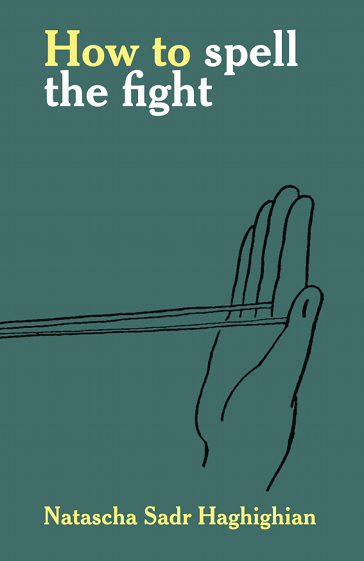
How to spell the fight
James R. Murphy, a math teacher at LaGuardia, New York, regarded mathematics as the most powerful and manipulable abstract language available to humans. To acquaint students who don’t “like” math with abstract and systematical thinking, he put a piece of string in their hands and taught them to make string figures.
How to spell the fight follows a thread that has been running through our fingers from centuries past till the present day, morphing from the tangible string figures that join our hands in childhood to the more elusive computational algorithms that engage our fingers today. Following this line of inquiry through various twists and turns, a conversation about collective agency emerges with the aim of rethinking current paradigms of cognition, education, and power.
Natascha Sadr Haghighian is an artist living in Berlin. Her research-based practice encompasses a variety of forms and formats, among them video, performance, installations, text, and sound. She tries to learn how to make string figures.
This is the fifth book in the Kayfa ta series, a publishing initiative of Maha Maamoun and Ala Younis. Each book in the series is a monographic essay commissioned in the style of how-to manuals that situation themselves in the space between the technical and the reflective, the everyday and the speculative, the instructional and the intuitive, and the factual and the fictional.
Softcover
€6.00
Related Books